Skip to content

The Final Curtain Call

2012 January 16

I might be apt to look to endings at the moment but it was with a curious sadness I saw that Marissa Mark had been sentenced to six years for hiring Essam Eid to kill her ex-boyfriend. You see, Mark’s sentencing is the absolute final act in the story I’ve been following for the past four years, the story that gave me my first book and the story that was just the best story of any trial I’ve followed in six years of the courts.

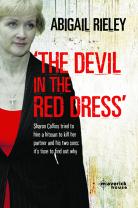
If you haven’t heard about the bizarre story of Essam Eid, would-be Internet hitman and hapless conman, then take a look at the page The Story Behind The Devil in the Red Dress on this blog. It still amazes me that Eid managed to hook not one but two femme fatales with his hitmanforhire.net website – the link to a cached version of the now defunct site is over to your right. Not only did he manage to hook two clients with that piece of flim-flam but he also got two idiots applying for work!

Eid is currently serving a 33 month sentence for the Marissa Mark case. He was sentenced in December on a single charge of conspiracy after finishing his sentence for the Irish leg of his escapade. I feel kind of sorry for the guy, even though he was so spectacularly inept at a life of crime (he tried it twice and got caught twice). He was hoping for a non custodial sentence and time to rebuild his life and reconnect with his daughters. At his appeal last March he asked for early release to attend his daughter’s graduation. He always did seem to be an exceptionally proud dad – he even incriminated himself during the Irish trial by pointing out his beautiful daughter to the jury. I admit it, I always had a soft spot for Eid – as a character I couldn’t have made him up!

It’s a little strange to think that all the sentences have now been handed down in this case. Nothing’s pending any more. This has been a very long and drawn out story to cover. By the time Mark is released from jail, assuming she serves the full six years, she will be more than twelve years away from the break-up that drove her to try to get her ex’s new girlfriend killed.

Even though on paper, Marissa Mark has a lot in common with Sharon Collins when you look at the facts of their individual cases there are some stark differences. Sharon was a mature woman who was considering killing three people for financial gain.  She flirted back and forth with Eid in an extraordinary series of emails and phonecalls and mused about the best way to kill her partner and his two grown up sons. When she is released from prison next year all eyes will be on whether she is whisked away to foreign climes by her number one victim, the staggeringly faithful, although increasingly on and off, PJ Howard.

Mark on the other hand will be deported when she gets out of prison, to Trinidad and Tobago where she was born and which almost all her family have now left. She pleaded guilty, unlike Sharon who cooked up a fictional blonde writing tutor called Maria Marconi as an alibi and still maintains her innocence. Mark also called off the hit – although Eid and his girlfriend Teresa Engle turned to the victim, Anne Lauryn Royston, in an attempt to get more cash.

Mark financed her dealings with Eid and Engle from Paypal and three credit cards she fraudulently accessed from her work in an insurance firm. Her legal team described her actions as “an absurd whimsical plan” and noted that Eid was clearly more of a scam artist than a hardened criminal.

At her  sentence hearing she told the judge “That’s not part of my personality. That’s not part of my character. That’s not who I am at all.”

Nine members of her family spoke for her at the hearing. They described her as “kind, thoughtful, loving, with an infectious laugh”, the “kind of person who would give you her last dollar”. Mark followed her mother to America when she was 10 and since then has been climbing towards the American Dream. After a brief youthful wander off the tracks she had graduated college and gone on to get a good job in New York.  She owned her own house and car and had a dog called Angel who waited at the door for her every day.

It does seem harsh that she will now be sent back to the country she left as a child although, unlike many of her family, she had never obtained US citizenship. At the sentencing, US District Judge Gene E.K. Pratter noted that there was a strong need to deter others from trying something similar. She told the court “Society needs to see that a person who uses this impersonal device to put another person’s well being at risk will be punished.” It’s hard to argue with her point. If this case has shown one thing it’s that too many people believe you really can buy anything online.

While I was researching Devil in the Red Dress I learnt more than I ever want to about the kinds of things that people offer online. It’s too easy to assume that what you do from your computer, sitting in your living room, study or bedroom, has no consequences. Whether it’s bullying people you can’t see or trying to buy something you never would face to face, just remember that it’s still real people, real money, real laws, still real life. Just because you’ve never left your house doesn’t mean it didn’t happen.

Still I’m going to miss the unfolding of this virtual story. While I know I won’t have heard the last of it this particular story arc has finished. It’s going to be a long time before I find another story quite like the story of the devil in the red dress and the poker dealing Egyptian “hitman for hire” from Vegas.

Getting Back into the Swing

2012 January 14
by Abigail

I haven’t posted here for several months – in fact I haven’t written anything anywhere much since November. There’s a reason for that. In mid-November I got word that my mother was terminally ill. By the end of the month she was dead.

I’ve wandered through the past two months in a bit of a daze. When a parent dies suddenly it blows everything sky high. Every day for the past month and a half I’ve feeling around on the floor for the shattered pieces and trying to put everything back as it was. It’s not done yet, still the same bomb site, but at least now things are ordered enough to start to write them down.

As long as I can remember I’ve dealt with the world by turning it into words on a page. I’ve kept diaries, written stories, blogged about the way I see the world. When something hurts, even when something shatters, I’ll start thinking of ways to turn it into words. This happens with the good things two but I mainly write about pretty dark subjects so it’s the dark stuff that tends to get used first. The problem is that when it’s not dark, when it’s just red raw and seeping pain, then the words won’t come.  That’s the way it’s been. That’s finally the way it’s not any more.

My mother was a complicated woman.  Don’t get me wrong, I loved her deeply, but she could be a hard woman to live up to. She was an actress.  The kind of woman who could light up a room with her entrance. She was larger than life, funny, fiercely loyal and ever so slightly crazy. Talking to family over Christmas there were stories of late night dinners, dramatic flourishes and lots of laughter. Looking over old photos I see a vibrant woman, demonstrative and striking, commanding the centre of every photograph.

I remember her singing Summertime to me at bedtime, or reading me The Hobbit and having me in stitches doing Bilbo with a cold being invited to parties – “Thangk you very buch!”  I remember the dolls house she made me out of a cardboard box with the double bed in the master bedroom made out of a moulded piece of polystyrene packing with a lilac Kleenex valance. I remember her sticking up for me when I was being bullied at school.

If my mother had a defining fault it was probably that she loved too fiercely.  It was her love that made me the person I am today but I think in a way it also broke her.  When my dad died suddenly when I was a baby it hit her so deeply I don’t think she ever really recovered. Every year in mid December, around the anniversary of that dreadful day when she opened the door to two policemen, she would feel all the world’s sharp edges. Even though she had a second marriage, another chance at a love of her life, I don’t think the pain ever really went away.

In the days and months after that awful day. When life slowly got back to normal and the family home was emptier than it should have been, she did what she could to numb the pain. But over time the crutch fused and became an extra limb.

My mum was an actress of a certain generation. Gregarious socialising goes with the territory.  It’s much the same with journalism and writing too for that matter.  But alcohol can be a treacherous friend and will all too easily lead you into trouble.  If you start to trust it it will trip you up. And my poor mother fell.

I wouldn’t wish liver failure on anyone. It’s a brutal way to go. But that’s what happened to the beautiful, warm, daft, clever, woman I remember so well. The last time I saw her, just before the end, I could see that dear nutcase in her still luminous brown eyes. By that stage she was hearing Welsh in a Leitrim hospital ward, and seeing the mountains of her North Wales childhood out of the window but as she squeezed my hand she knew me and lamented the fact we didn’t share books the way we used to.

So that’s why I haven’t been writing much recently. But slowly it’s coming back. Life continues and the world keeps turning and there are stories still to be told.

 Tani2-copy

Tani Bentis RIP  1941 – 2011

What’s in a Name?

2011 November 3

So Ireland has a new president.  Last Thursday the public hit the polling booths and resoundingly voted for Labour candidate Michael D. Higgins.  When the news broke journalists and bloggers alike tried to find a nice handy soundbite to stick our president elect into.  “Veteran politician”, “humanitarian”, “short”, “elderly”, many labels were bandied about.  The one that seems to have raised most eyebrows however is “poet”.

Now for those not familiar with President Michael D’s literary back catalogue, he’s well known in the west of Ireland, where he’s from, as something of a poet.  He’s not one of Ireland’s Nobel Literature Prize winners and he’s unarguably kept the day job as an academic and politician, but he has also published several collections of poetry with a couple of different publishers.  No one is making anything up when they say the guy is a poet. He’s even done poetry readings.

A couple of days ago The Guardian published an opinion piece by British poet Carol Rumens.  In the piece titled “Michael D. Higgins is No Poet” she dissects a poem of his the Guardian had printed as being apt on the day the result of the vote was announced.  It’s quite a hatchet job and it’s been doing the rounds on Twitter, as you might expect.  A couple of people have asked me what I think of the soon to be presidential verse.  And that’s the thing, the one thing that’s probably most extraordinary about the Guardian piece.

I could understand it if the man had been elected poet laureate or had won some big literary prize but he hasn’t.  His presidency will be memorable or damp squib depending on his political skills rather than his skills with a pen.  Even if he was the poetic peer of the kind of little old lady who rings up a certain kind of radio show to share a certain type of topical doggerel it wouldn’t really affect whether or not he’s any good at the job he’s just been elected to.  The question of whether or not Winston Churchill was a good journalist or writer or whether Ronald Reagan could actually act is only ever going to be of mild academic interest.  Their reputations will rest on something different.

But it’s not just whether or not he’s a good poet.  The headline of the article suggests that because his metaphors are clumsy and his lines don’t flow he is not worthy of the word poet at all.  And that’s not fair.  I’m not writing this to bang the Michael D. drum, it goes beyond whether we’ve elected a bard or a bullshitter.  That phrase sticks in my head because it moves the goal posts. It taps into something that I have a sneaking suspicion goes beyond what convenient soundbite can be applied to a certain politician.

Titles matter.  There are some you win, some you’re appointed, and others you earn after a long grind.  The title of poet falls into this last category, like writer or artist or author or even, perhaps pushing it a bit, journalist.  It’s the kind of title that you only feel comfortable calling yourself when you’ve got to a certain stage. It could be getting that first paid gig as a journalist, a first book for an author, an independent exhibition for an artist.  Everyone has their own level but the bar tends to settle at a fairly average height. To use myself as an example.  I’ve written stories as long as I can remember, even used to make little miniature books as a kid to bind them, but I would never call myself a writer.  I would say I liked writing, or I wanted to be a writer.  When I started work as a journalist I still hesitated to call myself a writer.  Apart from anything else I was working in radio.

Despite the fact that in my weekends and at night I was working on a novel, I would only describe myself as a journalist.  I’m even happy to call myself a hack – I’ve worked to pay the bills rather than serve the art – but, despite the fact the novel was eventually finished and I’d even started on a sequel, the title of writer and especially author just didn’t seem to fit.

These days I’ll call myself a writer and even author, quite happily.  I’ve written two books that were published and sold in bookshops all over the country and all over the web.  I know that whatever I do now I’ve passed that point.  The title is earned. 

There’s a lot of debate these days with the explosion of “independently” published books – covering everything self published down and including what would once have been firmly termed vanity publishing.  It’s so easy for anyone who chooses to publish their work and sell it through Amazon onto Kindles across the planet. A bit more work and expense can produce an actual book that can be ordered online or even stocked in real bricks and mortar bookshops.  The industry is changing and so a lot more people are probably entitled to call themselves author or writer. 

I wonder if this is where the viciousness of the Guardian article comes from.  A poet feeling encroached by any Tom, Dick or Harry hanging their hats on her hatstand and claiming a muse because they wrote a haiku once and published it on their blog.  If that’s the case I’d like to send sympathetic thoughts to Carol Rumens. The market has recently got a lot more crowded and it’s harder than ever to get your voice heard.  Even if you take the route of traditional publishing with it’s long apprenticeship in furtive adolescent notebooks, building the confident to submit to publishers, the eventual dizzying acceptance, even if you take that well travelled route, these days it’s damned crowded when you get there.

That’s why titles matter.  We hit the milestones and want the rewards.  When I was growing up the child of actors I was told that you couldn’t call yourself a pro unless someone not related to you was willing to pay.  If you could get paid for your art you had passed the most important milestone. A certain level of ability and experience was assumed because otherwise you wouldn’t get the gig.  By the time I had hit my 20s I’d worked out that talent and experience weren’t necessarily the only things that could get you paid for acting but that’s another post entirely!  The long and the short of it was that amateurs just aspired to it.  They weren’t willing to put everything on the line to earn a living at it.  Only when you took that step could you earn the title of fully fledged artist…usually with the realisation that the living would be extremely hard won.

Of course it’s not always so black and white.  Over the years there have been plenty of writers who’ve kept the day job.  Chekhov was a doctor, Flann O’Brien a civil servant, the list goes on and on and on.  Of course Michael D. was and is a politician.  It’s easy to be churlish about those who have clung onto the security of a day job don’t have the temperament to be an artist.  We all need to eat. The old milestones are still there.  The bar you have to touch to win the right to call yourself the title.  The president elect published his first collection of poems in 1970.  He’s not part of the internet chatter where everyone you meet online seems to be working on a book.  

It’s easy to assume that this is a new phenomenon brought about by the ubiquity of schemes like NaNoWriMo.  But I’m not convinced in the sudden explosion of wannabe literary activity. In my teens and 20s in Dublin it seemed like everyone I met was writing a book. That might just be an Irish thing but I doubt it somehow.  The only thing that’s changed now is all those people hunched over their bedroom notebooks can see all the other people and wave and talk about their hope and plans for world domination. The thing is that regardless of how someone takes those first few steps to that first and most important milestone, it’s not really changed.  It might be easier than ever before to publish your words and more people might call themselves writers and poets than have necessarily earned the right, but the bar is in the same place.  Whether it’s the self published author who’s sold enough ebooks on Kindle to give up the day job, or the literary effete who’s built a solid reputation through publication in a respected small press and enthusiastic readings there’s still a certain line to cross. We all instinctively know where it is.  It’s not the size of the cheque, it’s the respect it’s given with.

All this has nothing to do ability.  It’s more about a solid commitment to your craft (at the risk of sounding hopelessly pretentious).  I don’t know Michael D. Higgins as a poet. I do remember him as a Minister for the Arts.  Back then he showed his commitment to the arts and was damn good at his job.  I’m delighted that, for once, the person we’ve elected President is going to champion Ireland’s artistic heritage.  For that alone I wouldn’t fling pot shots at his own literary endeavours. I’m sure the debate about whether or not Michael D. is a good or bad poet will continue for years to come. I hope though that no one else will be silly enough to question whether he’s a poet at all.  That’s a goalpost that doesn’t need to be moved.

The Right to Vote

2011 October 27

Today Ireland is going to the polls.  By the weekend we’ll have a new President, a new West Dublin TD and, possibly, two changes to the constitution. Since I don’t live in West Dublin, I got to vote in three ballots.  Five years ago I wouldn’t have got to vote in any.

I became an Irish citizen in 2006. One of the reasons I decided to finally take the plunge was because I was sick of feeling like an observer in the country I am happy and proud to call my home.  We have a lot of referendums in Ireland.  It’s something of a national sport.  Since I hit voting age there have been 18 ballots, on both national and European matters that can have a direct bearing on life in this country.  Today’s vote makes it 20.  I remember the feeling of frustration not being able to have a say in votes on divorce, abortion (twice), the death penalty or the right to citizenship. Subjects that were hotly debated every time friends met for a pint or colleagues stopped for a cuppa.  To have thrashed through the issues, teased out the pros and cons, argued the toss, then watched as all my friends headed for the ballot boxes.

Not every referendum is on a “sexy” subject of course.  Not every one will get pulses raised and beer slopped on tables in excited pub conversations.  Some of them are overdue housekeeping, others are labyrinthine pieces of European legislation, but here in Ireland you can usually find someone willing to argue the toss.  Failing any other argument, there will usually be some vociferous contingent who fear that X or Y change will sneak abortion in by the back door.  Not all of them will have a direct bearing on the way you or I personally lead our lives but all of them are important.  It’s not much of a democracy if people are denied a voice but it’s even worse if those that have a voice refuse to use it.

Take today’s votes.  For most of the month long lead in to this vote the focus has been on the circus that was the campaign for our next president.  It’s only been in the last couple of weeks that attention has shifted to the two referendums we also have a say in.  On the face of it these are two of the not-so-sexy subjects, it’ll be interesting to see the voter turn out.  But these are important votes.  One of them is concerned with whether or not judges can have pay cuts.  In these straightened times it sounds like a no brainer.  The Yes Campaign would argue that anyway.  Under the current constitution a judge’s pay cannot be cut while he or she is in office.  The amendment will allow for cuts to be made in line with other public servants.  The problem I have with it personally is that the new wording is as vague as hell.  The third section of the amendment should be punished for crimes against language. But it’s late in the day for arguments – I’ll leave that to Dearbhail McDonald of the Irish Independent.

The problem with both the ballots today is that people are likely to vote with a jerk of the knee towards crooked bankers and ivory tower fat cats.  Fair targets perhaps but there’s a real risk of throwing the baby out with the bathwater here.  I’m pretty sure the government were just as eager to see wrongs righted when they drew up these amendments but slinging a load of legalese into the mix, giving it a quick stir by way of debate and tossing it towards the populous for deliberation is all a bit slapdash.  The problem with slapdash is that it can have unforeseen consequences.  I’ve seen the effects of the unforeseen consequence in the day job.  I doubt very much whether those who drew up the Criminal Justice (Amendment) Act in 2009 to deal with the threat of criminal gangs foresee that the Act would get one of it’s first airings in court at the collapse of a trial of four men accused of killing a young mother and burning her body.  The trial of those accused of killing Rebecca French collapsed because of confusion over wording. This might be an extreme consequence but it’s a stark reminder why clear wording matters. Legal language might look vague but that’s frequently because it’s over precise.  Too much space for interpretation means years getting clarification through case law and is too open to abuse.

This isn’t the first time I’ve felt strongly about the result of a referendum but it’s the first time I’ve been able to act on that conviction. I incorrectly said on Twitter earlier that these were my first referendums. I’ve voted twice before, both for the same thing (Irish governments have had a tendency to keep asking questions until they got the answer they were looking for) but the Lisbon Treaty, important as Europe is, felt like a far more academic exercise.  Today is about having a say in Ireland, not Europe.  This is about having a say in the constitution that grew out of de Valera’s 1937 Bunreacht na hEireann, the document that crystallised the idea of a new sovereign state into a set of rules and guidelines. 

The Divorce Referendum in 1995 was the last time the vote went over 60%.  That means that more than 40% of the voting public couldn’t be bothered to have a say in their country.  That makes me angry. It’s always a yes/no answer, do you or don’t you?  This is why there should be debate, why there should be full and detailed explanations on ALL the arguments.  It’s no longer up to the Referendum Commission to provide the arguments but it should be a civic responsibility to find out as well.  It doesn’t matter how disenchanted you feel with the way things are or who’s running the show, things will never change unless people use their voice.  I waited long enough to get mine. I will always use it.

The End of a Very Long Wait

2011 October 19

In March last year all the principal players in the Devil in the Red Dress case gathered in the Court of Criminal Appeal to hear Sharon Collins’ and Essam Eid’s appeals. Poker dealer Eid’s appeal on his sentence for charges of handling stolen goods was upheld and he was sent back to jail.  He’s since been extradited back to the States to face more charges related to the ill-fated Hitmanforhire website.

His co-accused was another matter.  Her case was more complicated and the three judge court required more time to deliberate. Sharon had been convicted of three charges of conspiring with Eid to murder her lover PJ Howard and his two grown-up sons Robert and Niall.  She had also been convicted of three charges of soliciting Eid to kill the three men.  Since Eid had been found not guilty of the conspiracy by the jury in the 2008 trial, Sharon’s three conspiracy convictions were overturned.  But then there were the soliciting charges.

Sharon’s lawyers argued that since the conspiracy no longer stood then she could not have solicited someone she didn’t conspire with.  The judges retired to consider their submissions and we waited.  And waited.

Today, over 18 months later, the same familiar faces gathered in the Court of Criminal Appeal to hear the long awaited ruling.  Legal counsel, gardai and journalists alike all waited anxiously for the final nod.  Would Sharon walk free?  Would the final three convictions be overturned? Would there be a decision that could have far reaching consequences for future conspiracy to murder charges?

In the end it was all over in a heartbeat.  Almost half an hour after the listed start time of 12.15 the judges took their seats and Sharon was lead into the court by two prison officers.  She looked well,despite the tenseness of the situation.  Wearing a grey tweed jacket and black trousers, her face tanned and impeccably made up, her blonde hair tied away from her face in a spiky pony tail bun she looked outwardly calm, although her chest rose and fell in time with the deep calming breaths she had started as soon as she sat down.  She hardly reacted when the decision came.  In fact she looked, if anything, dazed, as if the words hardly registered.

The ruling came so quickly, a succinct no, that there was a ripple along the press bench as journalists confirmed what they had heard.  The appeal against the three soliciting convictions had been rejected.  The sentence and three remaining convictions stood.  After such a long wait things were as they had been before.  Sharon would face another year in prison, her earliest release date not until Christmas next year.  Even though, after such a long delay, the verdict cannot have been much of a surprise, hope must have shot up in spite of everything.  She didn’t look back at the court as the prison guards quietly led her back to her cell.

The 42 page ruling took some time to digest.  Outside the court, reporters pored over the few copies of the printed document trying to find a strong line to lead with.  She had appealed on 23 grounds, although two of them, relating to  the dropped conspiracy convictions do not play a part in the judgement.  The other grounds, all rejected, fall into three basic areas.

The first of these areas is to do with matters that happened in America, before the events in Ennis in 2006.  They include the so-called Royston case.  This was a case in the States, shortly before Eid and his “wife” Theresa Engle had travelled to Ireland for their inflated exploits in Clare.  The pair had been approached, through the hitmanforhire website, by a woman called Marissa Marks who wanted them to kill her ex-boyfriend’s new girlfriend, Ann Lauryn Royston.  Just as they would later do in Ennis, Eid and Engle approached their victim and made her an offer they assumed she couldn’t refuse.  They told Lauryn Royston that they wouldn’t kill her if she would only buy herself out of the contract. Theresa Engle has served eight months in an American jail for her part in this escapade.  Eid pleaded guilty to similar charges earlier this month and is due to be sentenced in December.

Sharon Collins legal team had said that the prosecution in the Irish case had not disclosed all the relevant documentation concerning the Royston case and had also failed to get samples from a food blender in Eid’s house in Las Vegas that had contained a white residue, suspected of being the deadly toxin Ricin.  Ricin figured large in the Dublin trial. There had been much excitement in 2006 when a contact lens case was found in Eid’s cell in Limerick prison that tested positive for the toxin. Irish authorities had been told to look for the lens case by Eid’s lover Theresa Engle who claimed that the white residue on the blender in the Las Vegas garage was left over from a kitchen chemistry experiment, when she and Eid had attempted to brew ricin according to recipes they had found on the internet. The problem was that samples from the blender were not forthcoming for either the Irish prosecution or the defence and the minute traces found in the contact lens case were too small for the defence to conduct their own investigation.

The CCA ruled that the prosecution in Ireland had done everything in their power to access the American material but it had not been forthcoming. They therefore rejected the appeal on these grounds.

Going back to the ricin evidence, the Collins defence team had also appealed on grounds of one of the more dramatic events in the 8 week trial.  After a lengthy period of legal argument that took up much of the first three weeks of the trial, Judge Roderick Murphy, had performed a spectacular u-turn on an earlier decision to disallow all the ricin evidence.  This decision would also have meant that the star prosecution witness Theresa Engle would have been a rather damp squib, unable to share many of the more damaging elements of her testimony.  Today the CCA ruled that the judge had been correct to reverse his decision and allow the evidence after all.  Prosecution witnesses had not been available for the legal argument so Judge Murphy allowed the matter to reopened to hear the additional evidence.

The next area of appeal grounds concerns another dramatic bit of evidence.  Builder John Keating turned into rather a star during his evidence.  He had been called to provide an alibi for Sharon, who said she had been meeting him to discuss renovations of her mother’s house in Ennis at a time when she was supposed to have been sending a particularly incriminating email from the lyingeyes98 yahoo email account to Eid’s alias “Tony Luciano”. There was much confusion over Mr Keating’s diary and we were all treated to a bizarre account of a trip to England and family birthdays as he tried to pinpoint the exact date.  He also alleged that he had been threatened by one of the court gardai, although this was never proved. The CCA ruled that the whole confusing episode had been adequately explained by Judge Murphy in his charge to the jury. The Collins team had also appealed on the grounds that Detective Sergeant Michael Mulcahy had raised an incorrect suggestion that Robert and Niall Howard had both said in their statements that Sharon had been in the office of the family business at a time when the lyingeyes email account had been opened on the office computer.  Once again the CCA ruled that the matter had been dealt with adequately in the charge and there was no grounds on which to grant an appeal.

The final area is the one that had caused some consternation among gardai and journalists alike, the question of whether the remaining charges, for soliciting, could still stand.  The defence had argued that for one thing, the jury did not have an adequate explanation of the whole issue of soliciting to kill and further that since the conspiracy charges had fallen the soliciting charges should do likewise, on the grounds that one was impossible without the other.

The CCA however ruled that the judge’s charge was perfectly adequate and that he had “succinctly and correctly” explained the offence.  They also ruled that there was absolutely no inconsistency in a jury finding no conspiracy but then convicting someone of soliciting the other person to kill.  They pointed out that if Eid had all along been intending to pull a scam then there would have logically been no conspiracy to murder.  Sharon on the other hand would not have known this when she solicited Eid to kill the Howards.

There were plenty relieved faces when the judgement was announced.  I’m sure mine was one of the most relieved.  Whatever I might think of the grounds on which Sharon sought her appeal, if it had been upheld the story that I had written would have been invalid.  Even though the case affects real people, the book is always going to be my baby.  I’d love to get to visit the set of a movie based on the case, with my book credited with it’s part in that account. The rights have already been sold on Devil to producer Michael Duke. One day maybe I’ll get my set visit.

In the meantime I’ll be keeping an eye on what happens to Essam Eid in the States.  He pleaded guilty to conspiring to extort money from Ann Lauryn Royston and is due to be sentenced in December.  He could serve a maximum term of imprisonment of five years.  This is a story that just keeps going.

The Past Under Our Feet

2011 October 15

May Street child

When I was a child growing up in London I got a tremendous kick out of the fact that, in some people’s back gardens, you could dig down and find a layer of black soil.  That soil, perhaps a little richer, a little grittier than the loam above, down where only the deepest roots reached, was the scorched earth that was left when Boudicca, the Queen of the Iceni, attacked the Romans at Londinium.

When you live in a city that has stood in the same place for hundreds and hundreds of years you live on the past.  When you walk down the street you are walking on top of history.  In a city like London, or here in Dublin, that history can reach back hundreds if not thousands of years.  Most of the time we don’t pay attention.  We go about our lives in blissful ignorance.  But sometimes history breaks through.  Just as gardeners can dig down and find those ancient London cinders, so those who crack the modern surface can touch a more visceral time.

Yesterday workmen digging ditches for drainage pipes under cobbled streets near Smithfield made the grim discovery of a pair of legs.  The arms and the skull had been lost but what indications there were suggested that they were male legs.  Work on the drainage pipe stopped and the gardai were called.  It didn’t take long to work out that the shiny, heavily stained bones did not belong to a victim of recent violence and the investigation was passed to the archaeologists.

Franc-Myles-_May-St1

The area was fenced off and this morning a crowd of locals and tourists on their way to the Jameson Whiskey Distillery peered through the metal links at archaeologist Franc Myles hunkered down in front of a large gaping pipe, wielding a makeup brush.  Once the legs had been removed for further examination another even grimmer discovery had been made.  There in the clay, right in the path of the drainage pipe, was the skeleton of a child.  Impossible to tell the sex, all that can be known is that he or she had only lived till three or four and had lived it’s short life in the 1600s.

The skeleton of a child is so much more interesting than a pair of grownup legs and a torso (when foul play isn’t suspected).  Peering down into the shallow ditch were locals shocked at the thought that such small death had lain beneath their daily route for so long, children transfixed by a skeleton that somehow didn’t look remotely Halloween, tourists happily snapping away at a splendidly macabre addition to their tour.  Occasionally glancing up from his work Franc threw up facts when he was asked, or to stop the steady stream of intermittently hysterical speculation.  He didn’t mind working with the crowd, he said, the job had become so sanitised by health and safety regulations in recent years the public didn’t get the opportunity to see archaeology in the field much. 

Lying half exposed, it’s little arms crossed demurely in front, the little skull cocked to the side in an accidental approximation of infant piety, the small skeleton was the centre of attention just as it would have been when it was laid to rest in the 17th Century.  It’s easy to imagine the pudgy hands grasping at a mothers hair in life, the grieving parents standing over the grave, which would have stood then within the graveyard.  The church, St Michan’s, is still there – it’s home to a celebrated crypt with a lanky crusader and fallen revolutionaries.  The graveyard though has shrunk over the years and forgotten bones it seems lie beneath the streets in the area.

It would have been so different in those days.  I’ve cut down May Lane so many times on my way to the Four Courts but they weren’t even built when the child was buried.  Ireland’s first Inn of Court was in an old Dominican priory near the spot where the Four Courts now stand back then.  In the 1600s the Inn’s gardens stood where the Four Courts are “with knottes and borders of sweet herbs, pot herbs, flowers, roses and fruit.” The scents from that garden would have been carried on a summer breeze to the graveyard so close behind, where the child’s grave lay. 

These days, where the churchyard would once have stretched, the large glass King’s Inns building lies empty.  I’ve only ever seen someone in it once, when hurrying home to write up the day’s proceedings, I saw white suited swordsman fencing for a film crew in the cavernous ground floor.  The barriers that now surround the child’s resting place usually ring the empty building – god forbid rubbish should gather in it’s white elephant corners.

In another four hundred years what will be left of our world?  What relics will we leave under the roads of our descendents? The child will be gathered up and taken away for further study.  We’ll never know whether  boy or girl, what was its name, perhaps even why it died so young to end up under a busy side road.  It’s sad but it’s what it means to live in a city as ancient as this one.  We walk on what came before, we live on top of the lives of those who lived here before.  The life of a city is vertical. You rarely get the chance to see so except on days like today.  Sometimes history really feels all around us.

All in A Good Cause…

2011 October 14

I frequently bang on about Twitter on this blog.  I wasn’t one of the early adopters, those hardcore few in Ireland who wandered around the large empty virtual room of Twitter chatting amongst themselves.  I joined just before my first book came out, in November 2008, ostensibly for marketing purposes but it wasn’t long before I was hooked.

The thing about Twitter is that it’s a nice place to hang out.  Whatever reason you poke your nose round the door, if you get the whole virtual cocktail party thing, you’ll soon find yourself sliding round the door  to join in one of the fascinating, or silly, conversations going on around you.  Over the past three years I’ve made friends, found a new way to do my job and found out about more about the city where I live, all through Twitter.  I’ve live tweeted my way through several trials, found new opportunities and many new connections, not to mention some great nights out.

I could wax somewhat evangelical about that little blue bird for the rest of this post but this post has a purpose.  One of the things Twitter is best at is bringing people together.  It underpins how the whole thing works after all.  One of the best examples of this I’ve seen jumped out of the Twittersphere this week into a bookshop near you.

TweetTreats_cover_image_high_quality

About 18 months ago Jane Travers came up with the idea of putting together a Twitter cookbook in aid of charity.  It started gently, almost like a game.  Every day or so Jane would send out a challenge.  In 140 characters using the hashtag #tweettreats she asked for recipes for pasta dishes, or sweets treats, or quick and easy dinners.  The Twitter enthusiastically complied – hashtag games are a very popular way to pass a long evening and everyone knows the Twitter fixation with lunch plates (heavy sarcasm there before someone picks me up on that old cliche!) But this was more than your run of the mill hashtag game.  This was for charity – and a damn good charity at that.  Jane announced that proceeds would go to Médecins Sans Frontieres. 

This was something everyone could get behind and it’s great to see that so many did.  There are recipes there from writers Like Ian Rankin and Joanne Harris, TV personalities and actors like Dara O’Briain, Richard Madeley, Lou Diamond Philips and Paula Adbul.  The recipes range from the severely mouthwatering-sounding Cthulhu Crumble from award winning author Neil Gaiman, to the jokier Mrs Fry’s Saucy Surprise (“Smear lovingly and beat feverishly until fully hardened. Whip to a frenzy then drizzle before taking a cold shower & preparing your meal”) from "Edna Fry”, the much put upon “wife” of  broadcaster & global national treasure Stephen Fry and author of Mrs Fry’s Diary.

There are over a thousand recipes and 140 celebrities not to mention cooking advice and cooking tips from chef Marco Pierre White, who also provides the foreword. There seriously is something here for everyone with recipes to suit every pocket, every mood and every occasion – and did I mention it’s all for charity?

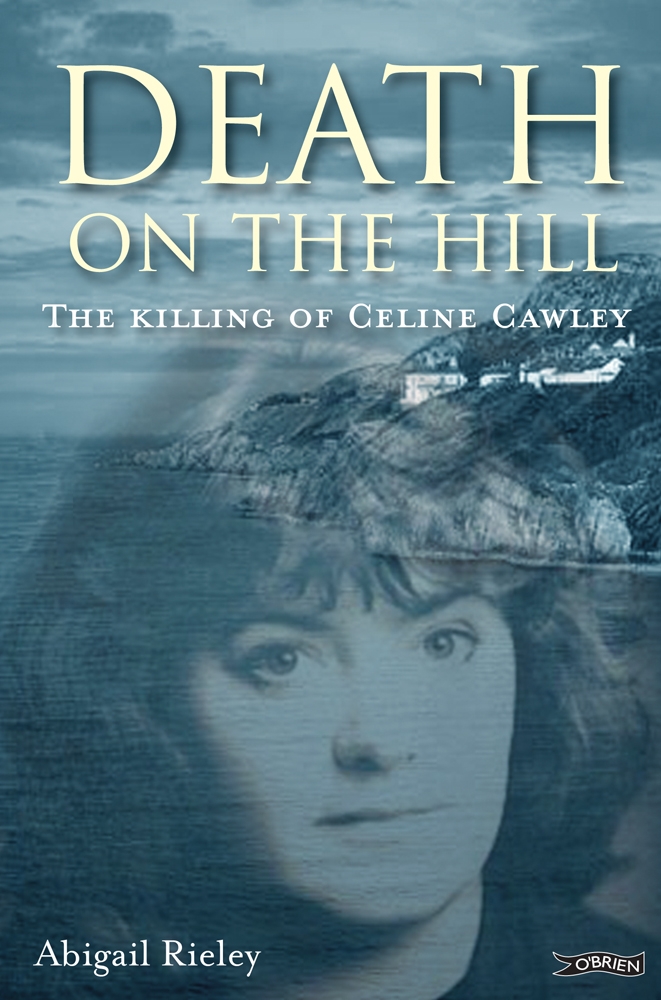
Full disclosure here, I do have a recipe in there (a very nice and easy pasta dish, if I do say so myself), and Jane has very kindly put a celebrity star by my Twitter name. Also the book is published by the O’Brien Press who published my most recent book Death on the Hill but don’t let that stop you rushing out to grab a copy.  In all honesty it’s a great little book with some truly mouthwatering recipes that I’m itching to try. I don’t usually do book reviews or plugs here but Tweet Treats is a worthy exception.  It’s an example of the best Twitter can bring and deserves to do extremely well.  So what are you waiting for?…

On Contempt and Scandal…

2011 October 12

One of the first things you’re taught as a journalist in terms of court reporting is how to avoid landing yourself in contempt of court.  There’s a very good reason for this.  There are limited workplaces where putting a foot wrong can land you in a cell but it can be a hazard of the job if you work in the courts.

The thing with contempt of court is that it’s perilously easy to land yourself in it, whoever you are.  At the risk of stating the bleeding obvious contempt of court could be broadly described as anything that breaks the rules of the court.  It could be a witness contacting a juror directly or, as happened in a recent case in the UK a juror contacting the accused. For a journalist it could be printing something prejudicial to the defence during a trial or printing matters said in the absence of the jury, even turning on a recording device in court. Some of these things are easy to avoid if you know the job – though mistakes do happen – but other forms of contempt are harder to duck.

There are many reasons not to comply with a court order.  It could be journalists refusing to reveal their sources, as happened to Colm Keena of the Irish Times some years ago or a case like that of Offaly pensioner Teresa Treacy who was jailed for contempt for not allowing the ESB onto her land to cut down her trees. 

But not all contempt is as easy to spot.  There’s a type of contempt known as “scandalising the court”.  This is the rule that, broadly speaking, means that a judge can throw anyone in his court into a cell for not showing sufficient respect.  That might call to mind Soviet dictatorships or the Wild West but thems the rules.  I’ve heard gardai threatened with contempt for gum chewing and an accused threatened for not sitting up straight.  Last week in Bray District Court a barrister ended up on the wrong side of a contempt charge for not sitting down when he was told.  Apparently the judge in that case,  Judge Murrough Connellan has a bit of a name for running a strict courtroom.  Back in 2006 he jailed a punk father for wearing a Sex Pistols t-shirt in court.

Judgements like the Bray one and Teresa Treacy’s incarceration might raise considerable comment but it’s the nature of things.  The judge is in charge of the courtroom and some wield that authority heavier than others.  There aren’t many judges now that would throw contempt at someone who’d arrived in court in jeans, or the wrong t-shirt for that matter, but it’s usually a good idea to dress neatly – just in case.   


In a totally unrelated matter, I’ve been writing elsewhere this week.  The National Library of Ireland asked me to write a post on my specialist subject ahead of their Thrillers and Chillers season of Library Late talks.  I’ve been spending a lot of time there recently, researching far more lawless times than these so I wrote a post on our fascination with murder and how some things never change – with examples from the 1850s.

How to be a Good Wife

2011 September 16

1950skitchen

Every day we’re bombarded with advice on how to be perfect.  Whether it’s the magic cream that will keep you young or the latest newspaper column on how to garden, how to cook, what gadgets will elevate your life onto a plane of Zen-like calm as the minutiae of life are sifted into ever smaller boxes, there are always voices feeding our insecurities with the promise that if you could only follow these three simple rules life will flow like it does on the movies.  With money tight and time even tighter it’s hardly surprising we feel like we’re floundering, but take heart.  We’re not the first generation to feel swamped by the image of the perfect home, perfect life.  It didn’t kick off in the 50s either whatever you might think from watching Mad Men. It goes much, much further than that!

At the climax of Shakespeare’s Taming of the Shrew Kate instructs her sister and step-mother with her newly hard won wisdom.  “A woman moved is like a fountain troubled” she scolds “muddy, ill-seeming, thick, bereft of beauty; and while it is so none so dry or thirsty will deign to sip or touch one drop of it.”  She could almost be selling the latest anti aging miracle potion.

Next week an 18th Century guide to how to cut it in the modern world will go under the hammer.  The Lady’s Companion  with the snappy subtitle An Infallible Guide to the Fairer Sex,  was pitched as essential reading for “virgins, wives or widows”.  So dogmatic, so L’Oreal.

My own interest in the impossible dream started when aspirations to domestic nirvana were limited to singing along to Somewhere That’s Green from The Little Shop of Horrors.  It was the early 1990s and I was living in a bedsit in Rathmines that was straight out of Rising Damp.  The wiring was certainly straight out of the 70s – ah the heady days before landlord registration! So the 70s edition Good Housekeeping Home Encyclopaedia seemed like an essential reference when I found it on the dusty lower shelf of a second hand bookshop.  It was only when I got it home I discovered the wealth of information about stain removal and household budgets.  In those days I tended to skip the bits about how to cater dinner parties and look your most alluring with a gin & tonic when your husband came home from a hard day at the office.

Growing up in the 70s and 80s surrounded by strong women, many of whom were going it alone I never doubted that I would build a career.  There was never any suggestion that happiness was in any way contingent on a well appointed kitchen or, come to that, a man.  By the time I reached my teens and my 20s I saw the perfectly rouged, high-heeled beauties in the “House Wife” manual as nothing more than Stepford Wives, enemies almost, who were very definitely letting the side down.

My stance softened when I met The Husband.  I seized the idea of building a warm and inviting nest with both hands, consumed with the urge to build a glowing, sweet-smelling home just for just us two.  I bought an apron and matching saucepans.  I learnt to make cupcakes and bread.  I was never going to be a kitchen goddess – the keyboard will always have more of a lure than the kitchen – but suddenly I could kind of see the point.  It was in the euphoria of early married life that my little collection of “Good Wife” manuals took shape.  Even when newsroom shifts meant I was living off M&S microwave meals for one I would look at the colour plates in these books and marvel at the spotless kitchens and gargantuan cleaning schedules.

The earliest book I have is the didactically titled Book of Good Housekeeping published by the Good Housekeeping sometime in the 1950s.   “The modern housewife”, the introduction informs, “has to combine many functions with those of mistress of her house; she will almost certainly do her own shopping and cooking, and probably a good part of the household washing and cleaning; more and more she is her own interior decorator, handywoman and often gardener…Even with the willing help of the “man about the house”, the average housewife today leads a very full life.”  The book covers everything from balancing the household budget to plumbing and beauty (all vanishing cream and makeup that looks it’s best from the other side of the room).

The schedule for housework alone provides a full working week and the requirement for table linen (2-3 table cloths, 2-3 breakfast cloths AND 2-3 afternoon tea cloths) means life would be a never ending cycle of table laying.  But despite the frankly terrifying standards you’re supposed to aspire to there’s something comforting about the photographs of primary coloured kitchens and living rooms.  For all the fish knives and grapefruit spoons, the book makes ideal home perfection look attainable – even if it is a full time job.

Then there’s Frankly Feminine published in England in 1972.  Times have changed and it’s no longer enough to match your lipstick to your suit colour (or to dress up when doing the housework for that matter).  The book starts off with a list of the calories in everyday foodstuff and many pictures of a very supple blonde girl in a red leotard but the housework plan is as strenuous as ever.  As the foreword says “This book has been compiled for today’s complete woman – who sees the stars around her and finds her happiness still in her home, with her family, and her friends.”  “Today’s complete woman” is still going to be spending a hell of a lot of time with table cloths and dinner parties even if the fish knives have now been superseded by fondue sets.

These were the books bought by and bought for brides.  I can all too easily imagine how their calm, dogmatic tone could be tinged with the mother-in-law’s hectoring tones. They set the bar pretty high and, when not viewed as social history, must have seemed like the Stepford rule book.  But I read them from a different world.  I might not come close to their exacting standards but I don’t have to.  I find it comforting not nagging that they break down domesticity into a simple set of rules.  With their diagrams for everything from changing nappies to laying out a kitchen to putting on eye shadow they break down the esoteric secrets of grown up life into a few easy steps.

Generally speaking I restrict my domestic goddess tendencies to Christmas and the very occasional dinner party and you’re a million times more likely to find me sitting at my desk with birds nest hair and ratty pyjamas than turning the mattresses and laying the table for breakfast.  But if I had the spare cash I’d love to bid for the Lady’s Companion…how fascinating to see how the mother-in-laws of the 1740s would given their instructions.

The Sinister Life of The Ciotog

2011 September 1

I sprained my thumb recently.  After a couple of weeks with it immobilised I’ve gained a new appreciation of the opposable thumb.  I’ve also been thinking a lot about left handedness.  The injured thumb is firmly attached to my left hand and suddenly I’m back to the level of awkwardness I remember all too well from childhood when I was first learning how to negotiate a world that had been built for the right handed.

Like many left handed people I’m so used to the fact that life is the wrong way round to the extent that I’ve developed a degree of ambidextrosity.  I can use right handed scissors, corkscrews and tin openers with my right hand – even if it will always feel a little bit “wrong”.  But my left hand will always be the dominant one so it’s been a frustrating couple of weeks.  Not being able to hold a pen is head wrecking and my poor little Esterbrook SJs have been sitting on the shelf drying out.  Holding a book and turning the pages became a ridiculous struggle and even using the remote control for the TV meant the bloody thing kept leaping out of my hand onto the floor – much to the Husband’s amusement.  Even the things I’m used to doing with my right hand seemed more awkward without the left hand to steady everything. 

So I’ve spent a lot of time dropping things, complaining and pondering the plight of the left handed.  In fairness the left handed thing isn’t a new preoccupation.  It’s a fact of life that comes up on an almost daily basis.  When I’m working in the courts for example, being the only regular left handed court reporter for a long time meant that I was always the one who would get to sit next to the accused when we reporters used to share a bench with them in the Four Courts.  If I didn’t sit on the left end of the row I’d always end up getting elbowed as I tried to take my notes. Then if the case took place in one of the smaller courts on the upper floors, with their cursed seats with the fold out table…I really hate those little flaps, if it’s not me twisting into knots to get my notebook on them and try to write, it was the one beside me grazing my elbow every time I lifted my pen.

The only time being left handed was a positive advantage was when I used to fence.  Sparring with right handed people I had a slight edge as it was harder for them to block me across the body while at the same time I was naturally better covered.  It doesn’t help much when whoever you’re fencing is better than you granted and it’s damned confusing when you come up against another lefty but on the whole it was a plus. 

Statistically left handed people are more likely to be accident prone (I can definitely attest to that one) and we even have a shorter life expectancy than the right handed.  We’re not the ones to ask for directions either as a lot of us have difficulty telling right from left after years of confusion. I could go on ad nauseum but I’ll leave other examples to this excellent site from Dr M.K. Holder of Indiana University.

An estimated 10% of the population are left handed and it can be hard for everyone else to understand what the fuss is about.  We don’t think about the hand we pick things up with or the hand we use to button our clothes.  It’s one of those things that we do instinctively and that’s what makes it so awkward to be programmed to go the other way.  Even social greetings slip easily into farce when the majority lean one way for that air kiss and you dip in the opposite direction.

It’s awkward and all too often the left handed lack of right handed coordination is dismissed as clumsiness, stupidity or even something darker.  The word “sinister” for example means left on the one hand, on the other it’s all Halloween.  The Irish word “ciotóg” meaning left handed person, is all too similar to the Irish word “ciotach” meaning clumsy, but also has echoes of something far wilder – the strange one, touched, perhaps, by the Devil himself.  Certainly when someone calls you a “ciotóg” (pronounced kitogue) it certainly doesn’t sound like a compliment.

Evil spirits were supposed to loiter behind the left shoulder – which is why salt is supposed to be thrown in that direction when it’s spilt and the French believed that witches greeted the Devil with their left hand. Even wearing the wedding ring on the left hand comes from the Greek and Roman practice of wearing rings on that finger to ward off evil spirits.  And it’s not just Europe.  Apparently in Kenya the Meru people believe that the left hand of their holy man is so evil he must keep it hidden.  There’s a lot more in that vein here, from the UK site of Anything Left Handed, who used to have a magical shop in Soho, in London that was my first introduction to things like left handed scissors.

I was lucky though.  At least I was left to be left handed.  So many people, in so many countries were forced to learn to write with their right hand.  Many were left mentally scarred, with speech and even with learning difficulties because of it.  Left handed people were for a long time believed to be rules by the right side of the brain – the intuitive side that’s good at the lateral, creative stuff.  It’s since been found that it’s not quite that simple but there do seem to be quite a few left handed people in the arts – based on my own completely un scientific observations.

I’ve learnt to negotiate the world just fine but the very fact that it’s always my left side that gets injured probably puts the lie to that. Over the years I’ve had a broken arm, broken ankle, sprained wrist, sprained shoulder and the most recent sprained thumb – always on the left. It’s just an extra level of annoyance in day to day life.  Walking down the street with a right handed person there’s always that introductory waltz as I try to walk on their left while they would prefer me on their right for  easy conversation.  Even my all consuming stationary fixation is necessarily tempered by practicality – school years spent with ink stains all up the side of my hand have left me with a preoccupation about quick drying inks and flat opening notebooks.  It’s such a pervasive kink it’s impossible to ignore – even if it’s something I rarely discuss because for 90% of the population these things just aren’t a problem.  That’s just the way it is.

But before I stop I’d like to mention a new entrant to the world of the sinister.  Irish company On the Other Hand have recently launched an Irish left handed shop so if you’re based here in Ireland you can still buy Irish and get left handed scissors and tin openers galore – and the rest.  I’m not connected to them in any way but it’s always nice to see people who understand how irritating the right orientation can be – even if you’re used to it and deal with it just as you’ve always done.

The thumb is now almost better and I’m sure I’ll be back to normal in a couple of days but I’m not going to stop being left handed. We all move through life in our own groove – I’m just more likely to bump into others because I will invariably go the wrong way!